

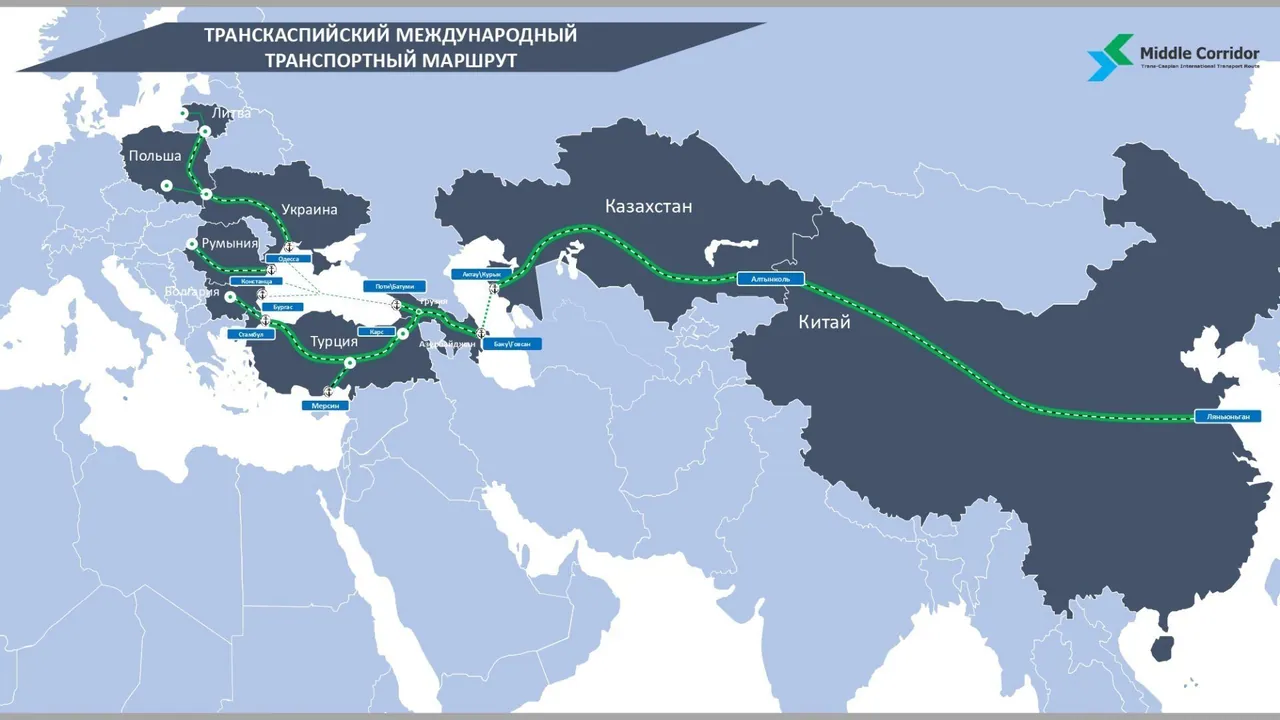
The Trans-Caspian Transport Corridor links Central Asia with the South Caucasus, Türkiye and Europe, and Uzbekistan wants to become one of its main hubs. On September 30, 2026, Tashkent hosted the second National Conference on the corridor with the Ministry of Transport, the European Commission, international financial institutions and private companies.
What the World Bank expects
A World Bank assessment published on September 28 says targeted investment and reforms could:
- more than triple trade volumes on the route and halve travel times
- with deeper reforms, quadruple volumes and cut travel times by two-thirds
- raise the combined GDP of corridor countries by 3.3% by 2040
This would require at least $25 billion in physical infrastructure by 2040, plus about $30 billion for connecting infrastructure and supporting systems.
Uzbekistan's numbers
- Freight between Uzbekistan and Europe reached 1.5 million tonnes in 2025, up 29%.
- Cargo via the Middle Corridor doubled in five years to 1.2 million tonnes.
- The corridor's share of EU-related cargo rose from 12% in 2021 to 28% by the end of 2025.
- Container traffic on the multimodal CASCA+ route (China–Central Asia–Azerbaijan–Türkiye–Europe) reached 6,722 TEU in 2025, up 47%.
Investment and digitalization
The EBRD is providing up to €38.4 million for the digital transformation of Uzbekistan Railways and is ready to invest about €1.5 billion in Trans-Caspian infrastructure over two to three years. Uzbekistan is electrifying rail sections, renewing its wagon fleet and introducing e-permits and cargo tracking. In February 2026, railway officials from Azerbaijan, Georgia, Uzbekistan and Turkmenistan signed a protocol on digitalization and freight development along the corridor.
"Creating and integrating digital logistics platforms to improve transport connectivity is important."
Growing international volumes start and end with domestic delivery — which is why digital, transparent trucking matters as much as ports and railways.
Source: Trend.az